Saluyot can easily grow in the Philippines. It is also known as jute leaves or Corchorus olitorius, is a leafy green vegetable found in Filipino, Middle Eastern, and African cuisines. It is native to the Middle East and has been cultivated for food and fiber for thousands of years. Sometimes you can even find it in an abandoned lot area or, surprisingly in your backyard growing independently.
Another name for saluyot is “bush okra” maybe because of the same texture as the okra when it is cooked. The leaves and young fruits are used as a vegetable, other countries used the dried leaves for tea and as a soup thickener, and the seeds are edible too. As well as being high in fiber, iron, calcium, and vitamins A, C, and E, saluyot leaves also have a slightly slimy texture when cooked, similar to okra, and a slightly bitter taste. In Filipino cuisine, saluyot is often sautéed with garlic and onions or added to soups and stews. It can also be used as a filling for spring rolls or lumpia. That is why cooking this crop plays a very important role in our health to boost our energy.
Saluyot is considered to be a highly nutritious vegetable, and its health benefits include aiding digestion, boosting the immune system, and improving cardiovascular health. It is also believed to have anti-inflammatory properties and may help to prevent certain types of cancer.
Ingredients
- 2 bundles of saluyot leaves
- 1 whole chopped garlic
- 2 small tomatoes sliced
- 1 medium red onion
- Cooking oil
Seasoning
- 1 tbsp Light soy sauce
- Dash of fish sauce
- Salt to taste
Cooking Procedure:
- Take out saluyot leaves, disregard the stalks. Soak it in salt water for at least 10-15 minutes. Wash and rinse it into flowing water and drain.
- On the pan, heat cooking oil, and saute chopped garlic, sliced onion, and tomato. Add saluyot leaves and seasoning. Stir-fry until mixed well. Cover it with a lid and simmer in low heat until saluyot leaves are fully-cooked. Add salt if needed.
Cooking Preparation Tips
- Make sure your saluyot leaves are fully-cooked to get a nice and good texture.
- You can also use chicken powder or any condiments you prefer.
- Wash the leaves thoroughly, especially when you get them from the wet market.
- Best serve while it’s hot with steamed rice or fried rice.
- You can also cook and add it with some dried fish, meat like pork, shrimp paste, black beans, fried fish, or as you like.
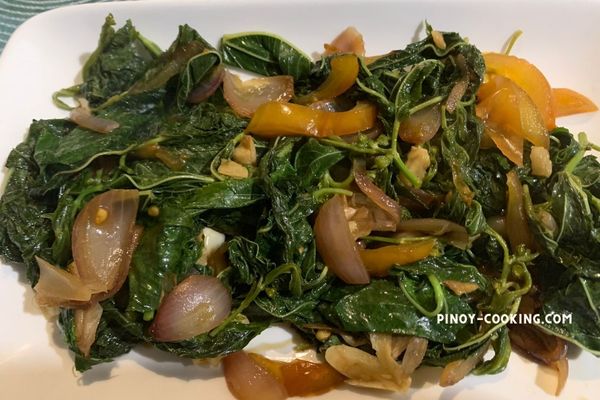

Ginisang Saluyot
Ingredients
- 2 bundles saluyot leaves
- 1 whole chopped garlic
- 2 small tomatoes sliced
- 1 medium red onion
- 3 cooking oil
Seasoning
- 1 tbsp light soy sauce
- 1 dash fish sauce
- 1 pinch salt to taste
Instructions
- Take out saluyot leaves, disregard the stalks. Soak it in salt water for at least 10-15 minutes. Wash and rinse it into flowing water and drain.
- On the pan, heat cooking oil, and saute chopped garlic, sliced onion, and tomato. Add saluyot leaves and seasoning. Stir-fry until mixed well. Cover it with a lid and simmer in low heat until saluyot leaves are fully-cooked. Add salt if needed.
Notes
Cooking Preparation Tips
- Make sure your saluyot leaves are fully-cooked to get a nice and good texture.
- You can also use chicken powder or any condiments you prefer.
- Wash the leaves thoroughly, especially when you get them from the wet market.
- Best serve while it’s hot with steamed rice or fried rice.
- You can also cook and add it with some dried fish, meat like pork, shrimp paste, black beans, fried fish, or as you like.
FAQ: Ginisang Saluyot (Sauteed Jute Leaves)
1. What is saluyot?
Saluyot, also known as jute leaves, is a nutritious leafy vegetable commonly used in Filipino and Ilocano dishes. It has a slightly slimy texture similar to okra when cooked.
2. How do I remove the slimy texture of saluyot?
You can reduce the sliminess by cooking the leaves quickly, avoiding over-stirring, and adding acidic ingredients like tomatoes or calamansi.
3. Can I use dried or frozen saluyot?
Yes. Frozen saluyot works well and cooks quickly. Dried saluyot needs to be soaked in water before cooking.
4. What ingredients pair well with saluyot?
Common additions include tomatoes, onions, garlic, shrimp, fish flakes, or small amounts of pork. It also pairs well with dinengdeng or bulanglang.
5. Is saluyot healthy?
Yes. Saluyot is rich in fiber, vitamins A and C, antioxidants, and minerals. It supports digestion and overall immune health.
6. How long should saluyot be cooked?
Saluyot cooks very quickly — usually 2 to 3 minutes. Overcooking makes it mushy and overly slimy.
7. Can I make ginisang saluyot without meat?
Yes. It can be cooked as a vegetarian dish using only aromatics, tomatoes, and seasonings.
8. What dishes go well with ginisang saluyot?
It pairs well with fried fish, grilled meats, tinapa, or simple steamed rice. It’s also a common side dish in Ilocano meals.