
Sandoricum koetjape or santol in the Philippines is a tropical fruit grown in Southeast Asia. It contains vitamins B and C provides healing abilities and prevent cardiovascular disease, strokes, and cancer, folate that reduces risk of birth defects and boosts metabolism.
As an ingredient, it is famous when cooked as ginataang santol. This recipe though makes use of this fruit as an additive to blackfin scan or galunggong cooked in vinegar, locally called paksiw.
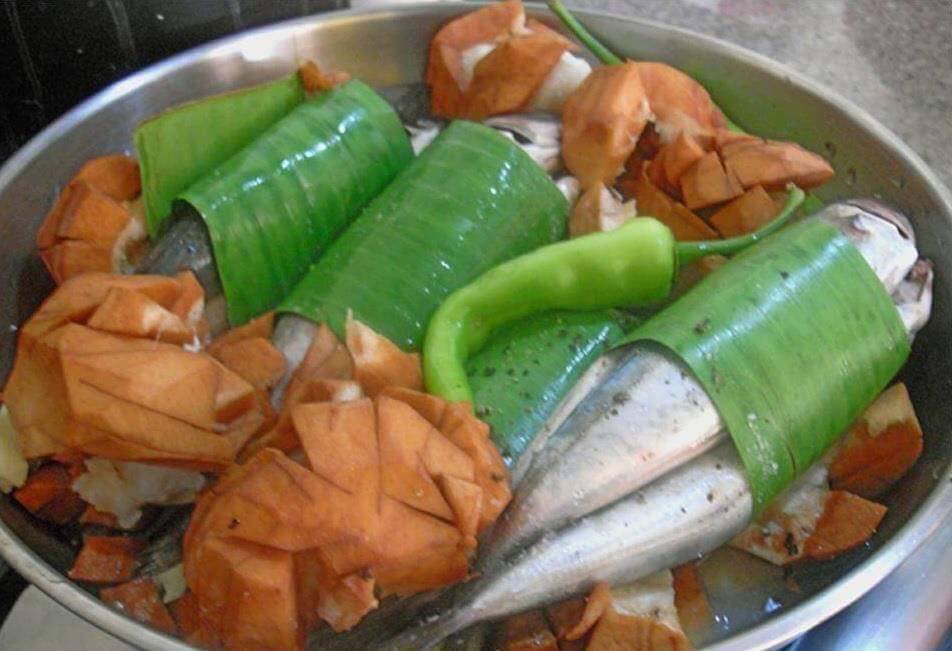
Ingredients:
- 1 kilo galunggong fish
- 3-4 pcs santol
- 1 onion, chopped
- 3 cloves garlic, minced
- 2 thumbsized ginger, sliced and crushed
- 3 siling haba (finger chilis)
- 2 tbsp vinegar
- 1 cup water
- Salt and pepper, to taste
- Banana leaves for wrapping (Optional)

Cooking instructions
- Peel the santol, the make some crisscross slits, then you may or may not remove the seeds.
- In a pan or pot, put the fish and all the ingredients together.
- Cover and let cook for about 15 minutes or until the water is reduced. Adjust the taste with salt and pepper
Paksiw Na Galunggong Sa Santol
Equipment
- Cooking pot
- Ladle
- Kitchen knife
Ingredients
- 1 kilo Galunggong fish
- 4 pcs Santol
- 1 pc Onion, chopped
- 3 cloves Garlic, minced
- 2 thumb size Ginger, sliced and crushed
- 3 pcs Siling haba (finger chilis)
- 2 tbsp Vinegar
- 1 cup Water
- Salt and Pepper, to taste
- Banana leaf, optional
Instructions
- Peel the santol, the make some crisscross slits, then you may or may not remove the seeds.
- In a pan or pot, put the fish and all the ingredients together.
- Cover and let cook for about 15 minutes or until the water is reduced. Adjust the taste with salt and pepper
FAQ: Paksiw na Galunggong sa Santol
1. What is paksiw?
Paksiw is a Filipino cooking method that uses vinegar as the main souring agent. It creates a tangy, savory broth that helps preserve the dish.
2. Why use santol in paksiw?
Santol adds natural sourness and a fruity depth of flavor. It creates a richer, more complex broth compared to vinegar alone.
3. Do I need to remove the santol seeds?
Yes. Remove the seeds and use only the flesh. The seeds are hard and not edible.
4. Can I use canned or preserved santol?
Yes. Pickled or preserved santol can be used, but adjust the vinegar and salt since preserved santol is often seasoned.
5. What type of galunggong works best?
Fresh whole galunggong is ideal, but cleaned and sliced fish also works. Frozen galunggong is fine as long as it’s thawed properly.
6. Why does my paksiw taste too sour?
Santol can be very sour depending on ripeness. Adjust by adding a bit of water, sugar, or more aromatics to balance the flavor.
7. Can I add vegetables to this dish?
Yes. Eggplant, okra, and ampalaya pair well with paksiw and help absorb the sour broth.
8. What dishes pair well with paksiw na galunggong sa santol?
It pairs perfectly with steamed rice, fried fish, grilled meats, or simple vegetable sides.